
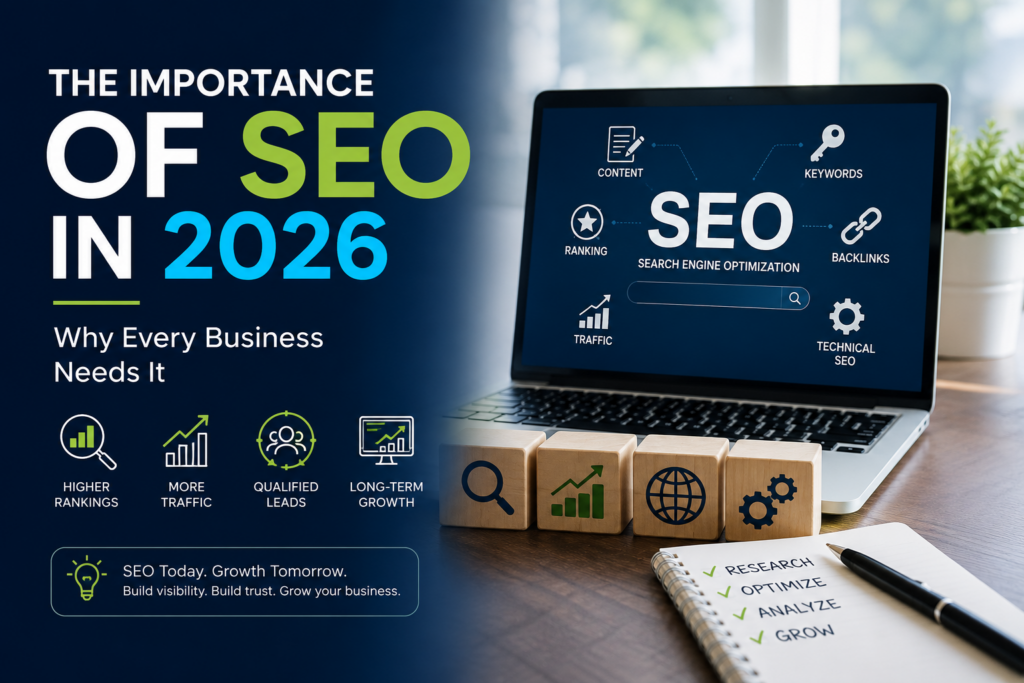
In today’s digital world, simply having a website is no longer enough. Millions of businesses compete for attention online, making it increasingly difficult for customers to find the right products and services. This is where Search Engine Optimization (SEO) plays a crucial role.
SEO helps businesses improve their visibility on search engines like Google, making it easier for potential customers to discover them organically. Unlike paid advertising, SEO focuses on building long-term growth by optimizing your website, content, and overall online presence.
Whether you’re a local business, an e-commerce store, or a service provider, investing in SEO can significantly improve your online success.
What Is Search Engine Optimization (SEO)?
Search Engine Optimization (SEO) is the process of improving a website to increase its visibility in unpaid, or organic, search engine results. It involves optimizing website content, structure, technical performance, and other factors to help search engines understand the website and connect it with relevant searches.
When someone searches for a product, service, or question on Google, the search engine displays results that it considers relevant and useful. Effective SEO helps a website become more accessible to search engines and provides visitors with a better experience.
SEO generally includes three major areas:
- On-Page SEO: Optimizing page titles, headings, content, keywords, images, internal links, and meta descriptions.
- Off-Page SEO: Building the website’s reputation through relevant backlinks, brand mentions, and other external signals.
- Technical SEO: Improving crawling, indexing, website structure, mobile usability, page performance, and other technical aspects.
A successful SEO strategy combines these areas with useful content and a clear understanding of customer needs.
SEO involves optimizing multiple aspects of your website, including:
- Website content
- Page speed
- Mobile responsiveness
- Technical performance
- Keywords
- User experience
- Backlinks
- Website structure
The goal is simple: help search engines understand your website while providing users with valuable and relevant information.
Why SEO Matters More Than Ever
Consumer behavior has changed dramatically over the last few years. Before making a purchase or contacting a business, most people begin their journey with an online search.
If your website isn’t visible on the first page of search results, there’s a high chance your competitors will gain that customer instead.
A strong SEO strategy helps your business:
- Reach customers actively searching for your services
- Build trust and credibility
- Increase organic website traffic
- Generate high-quality leads
- Improve conversion rates
- Reduce long-term marketing costs
Unlike paid campaigns, SEO continues to provide value long after the initial optimization is complete.
Why Is SEO Important in 2026?
1. Improves Website Visibility on Search Engines
One of the main benefits of SEO is improved visibility in organic search results. When people search for information related to your business, you want your website to be easy to find.
For example, if someone searches for “digital marketing services in Malappuram,” a properly optimized website offering those services has an opportunity to appear in relevant search results.
SEO helps businesses target relevant search queries through keyword research, helpful content, and well-structured web pages.
Greater visibility can introduce your business to potential customers who may not have discovered your brand through other channels.
2. Drives Relevant Organic Traffic
Organic traffic refers to visitors who reach your website through unpaid search engine results.
Unlike paid advertising, organic search traffic does not require you to pay for every click. However, SEO requires investment in content, optimization, time, and ongoing maintenance.
SEO helps attract people who are actively searching for information, products, or services related to your business. By creating pages that match their search intent, you can improve the chances of attracting visitors who are genuinely interested in what you offer.
Relevant traffic is particularly valuable because it can lead to enquiries, bookings, purchases, and other meaningful business outcomes.
3. Builds Trust and Brand Credibility
Customers often research a business before making a decision. A website that provides clear information, useful answers, and a positive user experience can help establish credibility.
SEO supports this process by encouraging businesses to create accurate, relevant, and helpful content that addresses customer questions.
For example, a solar energy company can publish articles explaining solar panel installation, maintenance, energy savings, and available installation options. This information can help potential customers understand the service and make informed decisions.
Strong search visibility does not automatically guarantee customer trust, but combining SEO with genuine expertise, transparent information, and good service can strengthen a brand’s reputation.
4. Helps Small Businesses Compete Online
SEO is useful for businesses of every size, including local shops, startups, freelancers, and service providers.
Smaller businesses may not have the advertising budgets of large companies, but they can still create useful content and target specific customer needs.
Local SEO is particularly valuable for businesses serving a particular area. Optimizing a Google Business Profile, maintaining consistent business information, collecting genuine reviews, and creating relevant local website content can help businesses improve their local online presence.
For example, a small business offering website design in Malappuram can create a dedicated service page that explains its services, target customers, and contact details.
5. Provides Long-Term Marketing Value
Paid advertising can generate traffic while campaigns are running. SEO, on the other hand, can continue attracting organic visitors after a page has been published and optimized.
Well-maintained pages that provide lasting value may continue to attract search traffic over time. This makes SEO a useful long-term marketing investment.
However, organic rankings are not permanent. Competitor activity, algorithm changes, evolving search behaviour, and outdated content can affect performance.
Regular monitoring, content updates, technical maintenance, and improvements based on user needs are important for maintaining SEO results.
6. Improves Website User Experience
SEO is not only about keywords and search rankings. A good website experience also matters to visitors.
People expect websites to load efficiently, work well on mobile devices, provide clear navigation, and make important information easy to find.
Technical improvements such as better page performance, a logical site structure, accessible content, and mobile-friendly design can make a website easier to use.
When visitors can quickly understand your services and find the information they need, they may be more likely to explore other pages or contact your business.
7. Supports Better Lead Generation and Conversions
SEO can attract potential customers at different stages of their buying journey.
Some people search for general information, while others search for specific services, prices, comparisons, or providers. Creating content for these different needs helps businesses connect with relevant audiences.
For example:
- Informational searches can be addressed through educational blog posts.
- Comparison searches can be addressed through detailed service comparisons.
- Service-related searches can be addressed through optimized landing pages.
- Local searches can be supported through local service pages and accurate business information.
Clear calls to action, useful service details, and simple contact forms can help turn relevant website visitors into enquiries and customers.
8. Helps Businesses Understand Customer Needs
SEO research provides valuable information about what people search for, which questions they ask, and what information they need before making a decision.
Keyword research, Google Search Console data, and website analytics can reveal opportunities to improve content and address gaps in your website.
For instance, if potential customers frequently search for the cost of a particular service, a detailed pricing guide or explanatory article may help answer their questions.
Understanding search behaviour allows businesses to create more relevant content and improve their communication with customers.
9. Supports Visibility in an Evolving Search Landscape
Search is changing as AI-powered search experiences, conversational queries, and more detailed question-based searches become part of how people discover information.
Businesses should continue following established SEO fundamentals while adapting their content to serve users effectively.
Useful approaches include answering questions clearly, demonstrating relevant expertise, maintaining accurate information, organizing content logically, and making website pages accessible to search engines.
There is no guaranteed method for appearing in every AI-generated answer or search feature. The most sustainable approach is to publish helpful, original content and maintain a technically sound website.
10. Helps Measure Marketing Performance
SEO performance can be monitored using tools such as Google Search Console and Google Analytics.
These tools can help businesses understand how their websites perform and where improvements may be needed.
Important SEO metrics include:
- Organic clicks and impressions
- Search queries and average search position
- Organic website sessions
- Engagement and landing-page performance
- Leads and enquiries generated through organic traffic
- Conversions and revenue attributed to organic search
Conclusion
SEO remains an important digital marketing strategy in 2026 because it helps businesses improve search visibility, attract relevant organic traffic, build credibility, and connect with potential customers.
A successful SEO strategy requires more than adding keywords to a website. It involves creating helpful content, improving technical performance, understanding search intent, building a positive user experience, and measuring meaningful results.
Whether you manage a small business, run an online store, or provide professional services, SEO can support your long-term digital growth when it is approached consistently and strategically.
Search engines and customer behaviour will continue to evolve, but the fundamental goal remains the same: help people find useful, trustworthy information when they need it.
Want to improve your website’s search visibility? Start with an SEO audit, identify the most important opportunities, and develop a strategy that supports your business goals